
EB2 NIW Visa: Everything You Need to Know
April 16, 2026
L-1 Visa Basics: What Business Owners Must Know Before Applying
May 14, 2026
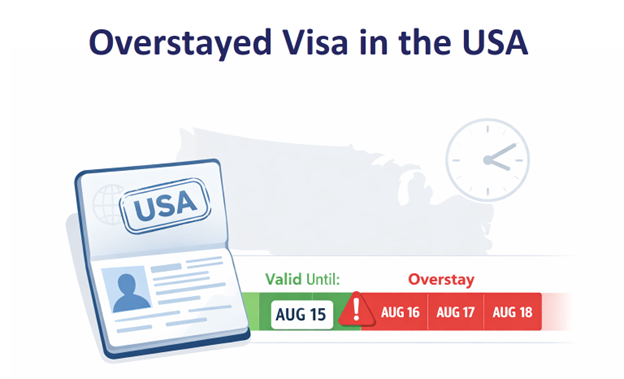
Overstaying a visa in the US, even by mistake, is one of the most stressful immigration situations a person can face.
If you're wondering what happens if you overstay your visa in the U.S., know that you’re not alone. According to the Department of Homeland Security, there were about 427,204 suspected in-country visa overstays in fiscal year 2024.
If you’re in this situation, you may have questions about deportation and removal, future travel, or whether you've committed a crime. This article answers all of those questions clearly. You’ll learn about the consequences, re-entry bars, legal status, and the options still available to you.
Visa Expiration vs. Authorized Stay: Know the Difference
Many people wonder what happens when a visa expires, and whether that automatically puts them out of status. The answer may surprise you. A visa stamp in your passport is simply an entry document that tells a border officer when you may arrive at a U.S. port of entry. It does not control or affect how long you can stay in the US.
Your actual deadline is determined by Form I-94. A U.S. Customs and Border Protection (CBP) officer gives you this record when you enter the country, and it includes a specific date by which you must leave. So if your visa expires, are you illegal? Not necessarily. What matters is your I-94 expiration date. Once it passes and you haven’t gotten an approved extension or left the country, you are considered to have overstayed your visa.
A visa overstay is one of the many immigration issues you might face. To stay informed, learn more about common immigration mistakes and how to avoid them.
What Happens If You Overstay Your Visa?
Understanding what happens if you overstay a visa requires looking beyond a single penalty. The consequences are multiple, they compound, and some are permanent.
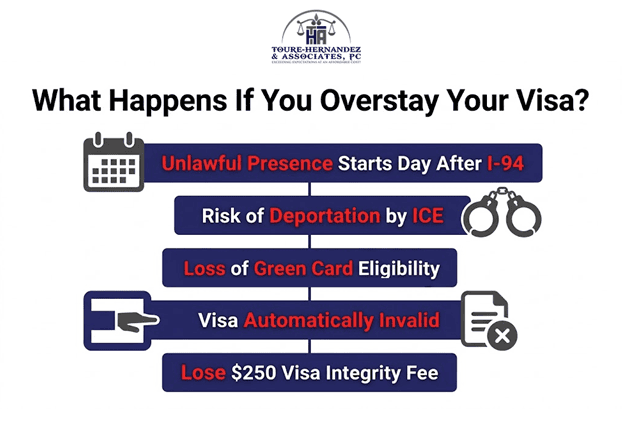
Let’s review these in detail.
1. Unlawful Presence Begins Immediately
The very first issue begins the day after the expiration date on your I-94 record (the document that shows how long you are allowed to stay). From that day forward, you are considered to be in the country unlawfully, regardless of whether you originally entered on a tourist visa, student visa, or any other temporary visa. This “unlawful presence” is the starting point for all the problems that follow.
2. Risk of Deportation and Removal
Once you have overstayed, you are at risk of being detained and deported at any time by U.S. Immigration and Customs Enforcement (ICE). In the current enforcement environment of 2025–2026, authorities are actively monitoring immigration violations. Even if you try to fix your situation by applying for an immigration benefit through USCIS, that action itself can bring attention to your overstay and increase the risk of removal proceedings.
3. Loss of Green Card Eligibility
Overstaying your visa also affects your chances of becoming a permanent resident. In most cases, you lose the ability to apply for a green card from within the United States. There is only one major exception. If you are an immediate family member of a U.S. citizen, specifically a spouse, an unmarried child under 21, or a parent, and you originally entered the country legally, you may still be allowed to adjust your status despite the overstay.
4. Your Visa Becomes Invalid
If you overstay, your current visa is automatically canceled under U.S. law (INA §222(g)). This means you cannot use that visa again. If you want to apply for a new U.S. visa in the future, you must do so from your home country. You are not allowed to apply at a U.S. consulate of your own choice in another country.
5. Loss of the Visa Integrity Fee
Finally, there is also a financial penalty. Since 2025, most non-immigrant visa applicants must pay a $250 Visa Integrity Fee under the One Big Beautiful Bill Act. If you overstay your visa by five days or more, you will lose that money forever. This adds a direct monetary loss on top of the legal and immigration consequences you already face.
How Long Can You Overstay Your Visa in the USA?
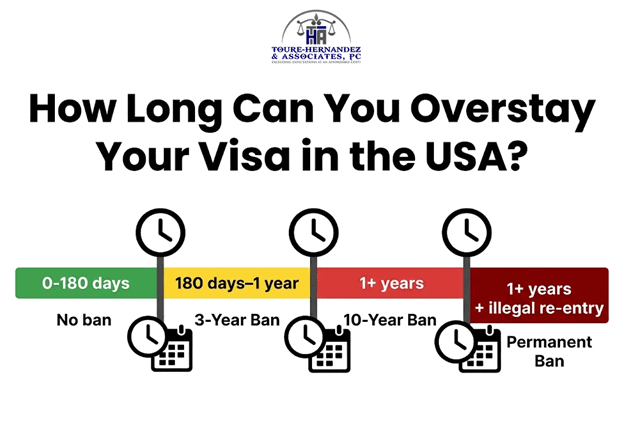
How long you remain in the United States after your authorized stay ends depends on the type of associated consequences. The penalty for overstaying a visa is stated clearly under the 8 U.S.C. § 1202(g):
- Less than 180 days: Unlawful presence, visa becomes invalid, but no re-entry ban.
- 180 days to under 1 year (leave voluntarily): 3-year re-entry ban.
- 1 year or more (leave voluntarily): 10-year re-entry ban.
- 1 year or more + illegal re-entry: Permanent (lifetime) ban.
Is Overstaying a Visa a Crime?
Overstaying a visa does not fall under a criminal offense. But it is a civil immigration violation. This is different from entering the United States without inspection, which is a federal misdemeanor under 8 U.S.C. § 1325.
Even though overstaying is not a crime, it still has serious consequences such as detainment, deportation proceedings, and re-entry bans. Also, in practice, the government responds to these civil violations with the same level of attention as it does to criminal immigration offenses.
Your Options: How to Fix an Overstayed Visa
If you have an overstay visa situation in the USA, you may have three possible resolution options, depending on your situation.

Here’s a complete breakdown of these options.
Option 1. File Form I-539 Before Your I-94 Expires
If your authorized stay has not ended yet, you can file Form I-539 (Application to Extend or Change Nonimmigrant Status) with USCIS before the expiration date listed on your I-94 record. If you submit the application on time and it is complete and valid, you are allowed to stay in the U.S. while USCIS reviews your case. During this review period, you do not accumulate unlawful presence.
Option 2. Adjustment of Status
Certain close family members of U.S. citizens are allowed to apply for a green card without leaving the United States, even if they overstayed their visa. This includes spouses, unmarried children under age 21, and parents of U.S. citizens.
Option 3. Form I-601A Provisional Waiver
If you have overstayed long enough to trigger a 3-year or 10-year reentry ban, you may be able to apply for a provisional waiver before leaving the United States. This waiver is requested using Form I-601A. To qualify, you must show that your U.S. citizen or lawful permanent resident spouse or parent would suffer extreme hardship if you are not allowed to return.
Each option has strict requirements and detailed rules. Therefore, it's recommended to resolve an overstay with proper legal advice by hiring an immigration lawyer. If you’re not careful, this can limit your future options or lead to the denial of your case.
Final Words
What happens if you overstay your visa depends on how long the overstay lasts and what legal options are still available to you. However, in all cases, the situation becomes more serious the longer you wait.
If you have overstayed your visa or are worried about your immigration status, the most important step is to speak with an experienced immigration attorney as early as possible.
At Toure-Hernandez & Associates, P.C., our team of immigration lawyers has extensive experience helping clients navigate complex immigration situations. This includes visa overstays, unlawful presence, and adjustment of status. Contact us today to take the first step toward protecting your future in the United States.