Visa vs. Green Card: Which Immigration Path is Right for You?
June 16, 2026
What is a Prenuptial Agreement? Everything Couples Should Know
July 13, 2026
What is an EB-3 Visa? A Simple Guide for First-Time Applicants
The EB-3 is an employment-based immigrant visa available to workers at all skill levels. With employer sponsorship, it provides a direct pathway to obtaining a U.S. green card.
According to USCIS data, EB-3 petitions maintain remarkably high approval rates. This means that well-prepared applications have a strong likelihood of success.
If you’re looking to apply for an EB-3 visa, this guide covers everything you need to know, including its eligibility requirements, processing timelines, and the application process.
You can also work with an experienced law firm offering USA immigration services to build a strong application from the beginning and maximize your chances of approval.
What is an EB-3 Visa?
The EB-3 visa is an employment-based immigrant visa that allows qualified foreign workers to become permanent US residents through sponsorship by a U.S. employer.
Immigrant Visa vs. Work Visa
It is important to understand that the EB-3 is an immigrant visa, not a temporary work visa. For example, visas like the H-1B allow someone to work in the United States for a limited period. However, EB-3 leads directly to a green card. So, the worker can live and work in the United States permanently.
Where Does the EB-3 Visa Fall in the EB Hierarchy?
The U.S. employment-based immigration system is divided into five preference categories, from EB-1 to EB-5. EB-3 is the third preference category in the sequence.
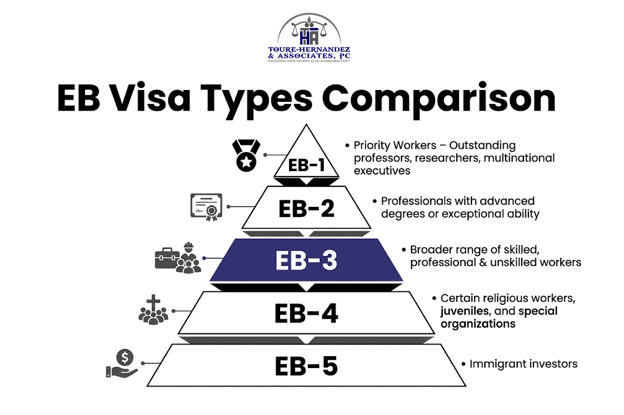
Unlike the EB-2 National Interest Waiver (NIW), EB-3 visa sponsorship from a U.S. employer is mandatory. Also, demand often exceeds the number of visas available. As a result, Congress limits EB-3 visas to about 40,000 each year. Because of this, processing times can vary significantly depending on the applicant’s country and category.
EB-3 Visa Requirements and Who Qualifies
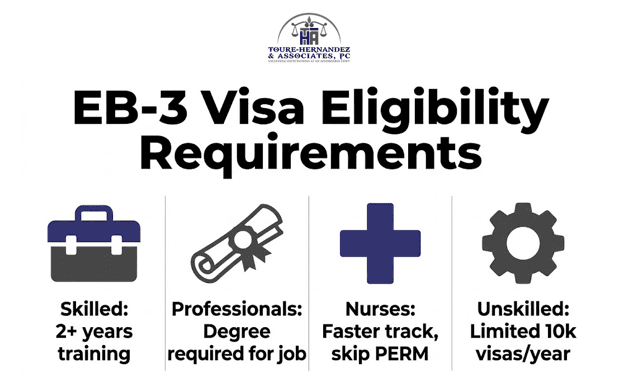
The EB-3 visa eligibility is divided into different worker categories. Which category you qualify for depends on your job, education, and work experience. Each category has its own requirements.
Skilled Workers
The EB-3 Skilled Worker Visa is for jobs that require at least two years of training or work experience, but not a bachelor’s degree.
To qualify, you need:
- A permanent, full-time job offer from a U.S. employer
- At least 2 years of related experience or the same duration of vocational training
- Experience or training that matches the normal requirements of the job
Common examples of EB-3 visa jobs for workers include licensed electricians, dental laboratory technicians, and CNC machinists.
Professionals
The Professional category is for occupations where a U.S. bachelor’s degree, or an equivalent foreign degree, is the standard entry requirement.
The key point here is that the degree must be required for the position itself, not simply something the applicant happens to have. Typical qualifying roles include occupational therapists, civil engineers, and school psychologists.
EB-3 Visa for Nurses
Registered nurses have a significant advantage under the EB-3 program. The U.S. Department of Labor lists nursing as a Schedule A shortage occupation. In other words, there are not enough qualified U.S. workers to meet demand.
Because of this designation, nurses can skip the standard PERM labor certification process, which can reduce the overall timeline by about 10 to 18 months. In addition, physical therapists also qualify for Schedule A status and receive the same benefits.
Other Workers (Unskilled)
The EB-3 Unskilled Worker Visa covers permanent jobs that require less than two years of training or experience. However, the position must still be full-time and permanent.
For example, jobs related to home health aides, commercial cleaning technicians, and agricultural equipment operators are eligible.
One important thing to keep in mind is that this category has a separate annual limit of just 10,000 visas, compared with the 40,000 visas available under the overall EB-3 program. As a result, waiting times are often much longer.
In addition, applicants in this category must complete the full PERM labor certification process. So, while the experience requirements are lower, the immigration process is not necessarily simpler.
How to Get an EB-3 Visa
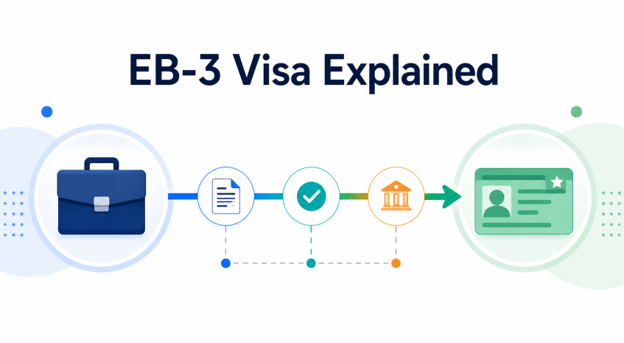
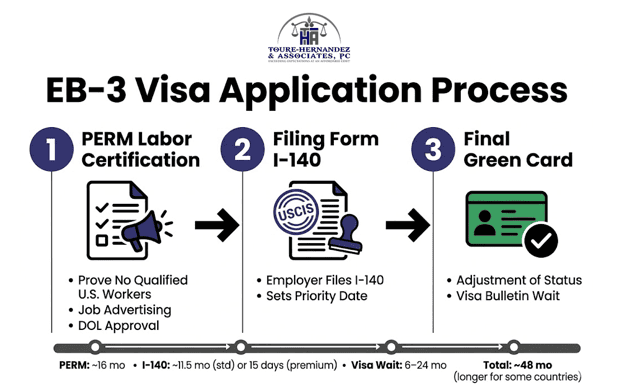
The EB-3 visa process moves through three sequential stages: PERM labor certification, the I-140 immigrant petition, and the final green card application.
PERM Labor Certification
For PERM labor certification, the employer must apply to the Department of Labor and show that no qualified U.S. workers are available for the position. To do that, they must advertise the job through specific channels and document the recruitment results.
Filing Form I-140
After the approval of PERM, the employer is required to file Form I-140 with USCIS. This petition formally supports the worker’s employer-sponsored green card application. When the I-140 is approved, it sets the worker’s priority date based on when the PERM application was originally filed, which then determines when the worker can move to the final green card stage.
If you are already in the United States, you must maintain a valid non-immigrant status throughout the process. Even a short lapse can create complications when filing for adjustment of status. See What Happens If You Overstay Your Visa in the U.S. for more on the risks.
How Long Each Stage Takes
According to EB3.work data, typical EB-3 visa processing times in 2026 are:
- PERM: About 16 months.
- Form I-140: around 11.5 months under standard processing, or roughly 15 business days with premium processing. This requires a $2,965 fee, according to USCIS.
- Visa Bulletin wait and final application: About 6 to 24 months after the priority date becomes current.
For most applicants, the entire process takes around 48 months. However, for applicants with per-country visa limits, it can take significantly longer. The extended timelines are largely the result of high demand across the immigration system. They do not necessarily indicate a problem with an individual case.
The EB-3 Visa Green Card Benefits
When an EB-3 application is approved, it leads to an employment-based green card. This gives the worker lawful permanent resident status in the United States.
In practice, this means you can:
- Live and work in the U.S. permanently.
- Change employers freely and do not stay with the sponsoring employer.
- Sponsor dependents (spouse and unmarried children under 21) for permanent residency.
- Access most federal benefits available to lawful permanent residents.
Path to U.S. Citizenship
For many people, the EB-3 is more than just a way to work in the United States. It is the first step toward building a long-term future there. After holding a green card continuously for five years, permanent residents can apply for U.S. citizenship. And if you are married to a U.S. citizen, you may become eligible right after 3 years.
Final Words
The EB-3 visa process is straightforward as long as you understand the categories, requirements, and realistic timelines from the start. However, even small mistakes in PERM documentation or petition filing can cause costly delays.
At Toure-Hernandez & Associates, P.C., we guide first-time EB-3 visa applicants through every step of the process. Our team has successfully helped countless workers navigate employment-based visa and green card applications with confidence. Contact us today for personalized and dedicated support for your U.S. immigration journey.